 thrive and awaken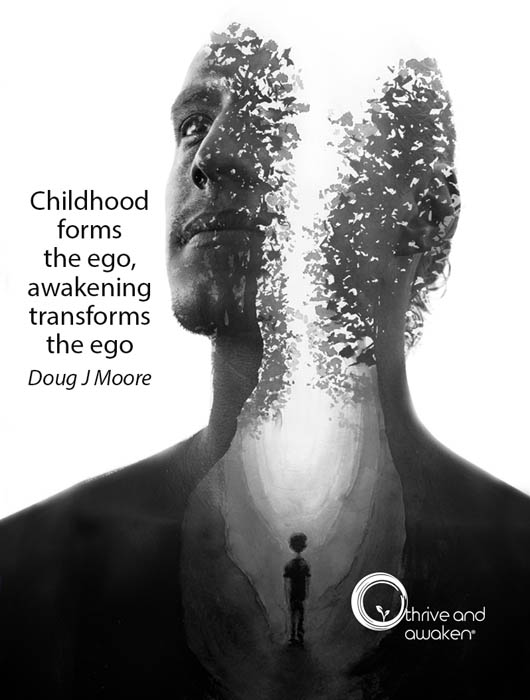
Thrive and Awaken® Tip
Your ego was not randomly created. It was shaped through a blend of inherited tendencies, early relationships, cultural conditioning, and life experiences. From the moment you entered the world, your nervous system began learning how to stay safe, connected, valued, and protected. Your personality, emotional habits, beliefs, and reactions gradually formed into the ego structure you now experience as “me.”
Some aspects of this formation arise from ancestral and biological predispositions. Other parts are deeply influenced by childhood experiences and the environments in which you were raised. Even the personality qualities associated with your Enneagram style can become amplified, softened, or distorted depending upon how much grounding, love, and support, were present in your early life.
The ego is not a problem. It is a necessary developmental process that helps us function in the world. The challenge is Survival Mode reactions of our ego often become rigid and automatic, limiting our capacity for presence, connection, and conscious choice.
Thriving and Awakening are not about destroying or transcending the ego as though it should or could disappear. They are about evolving or transforming it. As awareness deepens, the ego gradually becomes less reactive, fearful, and separate. It becomes more grounded, openhearted, and aligned with reality as it is.
Awakening transforms the ego from a structure organized around protection into one increasingly organized around presence. The personality remains, but it begins expressing in healthier, wiser, and more connected ways.
Reflection:
Take some time to notice how your early experiences may still shape the way you think, feel, and respond today. Which patterns seem rooted in protection or survival? What qualities begin to emerge when you meet those patterns with awareness, compassion, and presence rather than judgment?